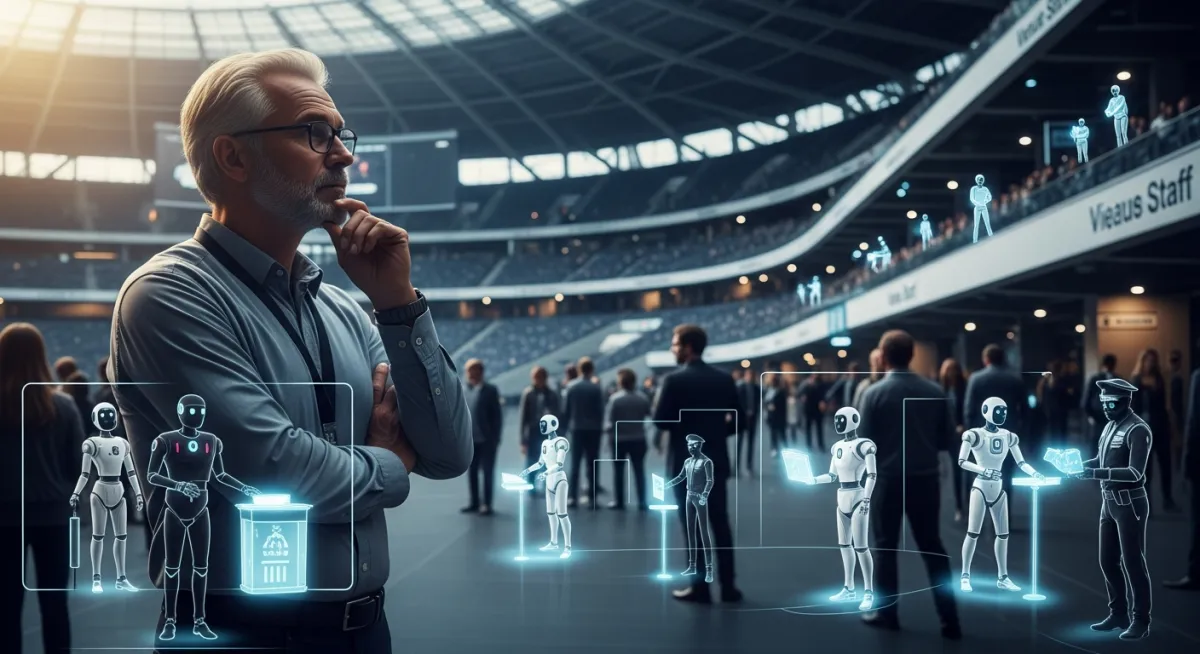
AI and Venue Staff: Boomer Take vs Doomer Take
Can AI Replace Your Front Desk, Coordinator, and Sales Team?
For venue owners operating lean, the appeal of AI is obvious. You need a receptionist to answer calls, a coordinator to manage details, and a sales manager to close bookings. Hiring all three at $40,000-60,000 each is $120,000-180,000 per year. You do not have that money. So you do the work yourself and burn out. Or you hire a part-time operations person and hope they scale. AI offers a third option: automate 50-60 percent of routine work and keep the remaining 40 percent human. The question is not whether AI can replace people, but whether AI applied correctly can free you up enough to actually run your business instead of drowning in operations.
Boomer Take: AI Is the Staff You Cannot Afford
Most venue owners cannot justify hiring a full-time receptionist at $40,000, a full-time coordinator at $50,000, and even a part-time sales manager at $20,000 per year. The math does not work. AI receptionists answer calls 24/7. AI scheduling software manages calendars and confirms appointments. AI writing tools draft contracts, emails, and follow-ups. For $100-300 per month total, versus $4,000 to $5,000 per month for even a part-time employee, the financial argument is overwhelming. Offloading 50 percent of routine tasks frees 10-15 hours per week that you can spend on tours, relationship building, and vendor coordination — the work that actually closes bookings. You cannot afford to hire someone to do repetitive work. AI can do it for cheaper than a coffee subscription.
The Boomer take is practical: AI is not perfect, but it is better than no operations at all. It is better than you handling every call and email while exhausted. It is better than losing bookings because your phone goes to voicemail during tours. Use AI to handle the volume. Use yourself for judgment.
Doomer Take: AI Cannot Replace Judgment or Relationships
Venues are live operations where things go wrong in real time. A catering truck is 30 minutes late. A guest has an allergic reaction. A storm knocks out power. No AI handles these situations with human empathy, creativity, and relationship leverage. The emotional moment when a bride walks into your space and her eyes light up requires a real person in the room, not an automated response. Vendors respond differently to a personal call from the venue owner versus an automated message. A caterer who is running late takes your direct call differently than an email reminder. A florist with a problem wants to talk to a human, not wait for AI to suggest solutions. You cannot offshore relationships to Go High Level. The work that keeps clients coming back is the work that requires presence and judgment.
The Doomer take is also valid: AI handles routine work, but your venue is not routine. The clients paying you $3,000-5,000 are not commodity purchases. They are relationships. You cannot automate trust.
What Smart Venue Owners Should Actually Do in the Next 12 Months
Month 1-3: Automate the three tasks requiring the least human judgment. Set up AI to handle inquiry responses, automated reminders for tours and payments, and review requests. These tasks are rule-based: if lead comes in, send response; if event is coming up, send reminder; if event happened, request review. Go High Level handles all three. The goal is to remove 30 percent of your time on repetitive messaging.
Month 3-6: Add AI phone answering for after-hours calls. Your phone rings during tours. A potential client calls, gets voicemail, and calls three other venues instead. An AI phone system answers after hours, routes the call to your CRM, and gives the caller an option to schedule a tour or leave a message. Your overnight phone coverage now costs $50/month instead of paying someone to answer calls from their bedroom.
Month 6-12: Evaluate whether AI freed enough time to stay lean, or whether your revenue now justifies a part-time coordinator. If you have automated inquiry responses, reminders, reviews, and after-hours calls, you have probably freed 10-15 hours per week. That is enough to handle tours, vendor coordination, and relationship building solo. If your bookings grew from automated systems, maybe you now do have revenue to hire someone part-time for administrative work. The ideal outcome: AI handles the repetitive volume, humans handle the relationships and decisions. You are not replacing staff; you are augmenting your capacity without being able to afford traditional employees.
The Math on Implementation
Go High Level costs $99-300/month depending on features. AI phone systems run $50-150/month. AI writing tools like ChatGPT run $0-20/month. Total: under $500/month for the entire infrastructure that would cost $3,000-5,000/month as an employee. Payback period: one to two weeks of freed-up time. If automating inquiry responses saves you five hours per week and you can use those hours to close one additional $3,500 booking per month, you break even immediately.
Critical Success Factor: Human Follow-Up
The biggest mistake venue owners make is setting up automation and then expecting it to close bookings on its own. AI can qualify leads and send reminders. AI cannot close sales. After an AI handles initial contact, you still need to personally talk to serious prospects. After an AI reminds someone their payment is due, you still need to follow up on late payments. The win is that AI is now handling the volume so you can focus on the judgment work. You go from "handling everything" to "handling the important things."
Want one more place where local clients can find you? Add or claim your venue on the OMG Rentals Directory at book.omg-rentals.com — free listings, no setup fee, no contract.