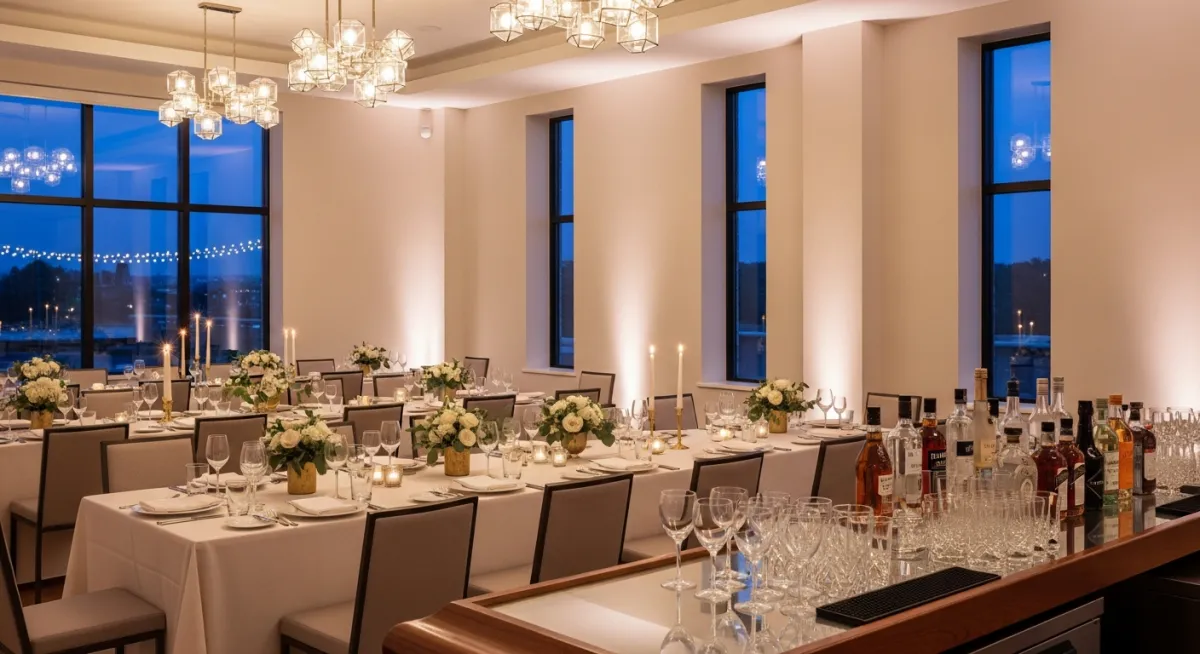
Event Descriptions That Sell Without Sounding Salesy
Your Words Sell When You Cannot Be There
Most venue descriptions are forgettable. A couple scrolls through Peerspace and reads: "Beautiful event space perfect for all occasions." They see that on four other listings and keep scrolling. Your words have one job in that moment: create enough curiosity and desire that they click through to book a tour. If the description is generic, they do not click. Your actual space is incredible. Your listing description just failed to prove it.
The framework that works is simple: Features, Feelings, Fit. It balances concrete information with sensory details and specific use cases. A couple should finish reading your description and have a vivid mental image of the space, know exactly what you offer, and understand whether it matches their event.
The Framework: Features, Feelings, Fit
Features: Concrete Specs That Matter
Square footage. Ceiling height. Light quality and direction. Maximum capacity. Key amenities (built-in bar, kitchen access, sound system, parking, ADA access, climate control). Be specific. Do not write "Large space with great light." Write "2,400 sq ft with 14-foot ceilings. South-facing windows flood the space with afternoon golden hour light. 60 dedicated parking spaces."
Specific features let couples do basic mental math. "2,400 sq ft divided by 80 people equals 30 sq ft per guest—that is spacious cocktail reception sizing." A couple can visualize it. Vague descriptions leave them guessing.
Feelings: Sensory Language That Differentiates
Every venue has square footage and capacity. What makes yours unique. Use sensory language to show what it feels like to be there. "Warm exposed brick walls. Soft afternoon golden hour light. A neighborhood that feels a world away from downtown." Or: "Industrial timber beams. Polished concrete floors. Modern minimalist clean." Or: "Ornate moldings and crystal chandeliers. Burgundy velvet seating. Old-money sophisticated."
Feelings are what people remember. They do not remember "4,000 sq ft." They remember "I walked in and felt like I was in a Tuscan villa." Write the feeling. Use the kind of language you would use telling a friend about a place you love.
Fit: Specific Use Cases
Name specific event types your space is ideal for. "Perfect for intimate weddings of 50-100 guests. Bridal showers. Engagement parties. Brand and editorial photography shoots. Corporate off-sites and team retreats." This does two things: it confirms the couple is looking at the right space (if they are planning a 200-person wedding, they move on), and it gives the couple permission to book you for what they are doing (they might not have thought of you for a corporate event, but now they know you welcome them).
Writing Steps: How to Draft It
Step 1: Describe Entering Your Venue as a First-Time Visitor
Close your eyes. Imagine you are stepping into your venue for the first time. What do you see when you walk through the door. What is the light like. What surfaces catch your eye. What is the temperature and air quality. Is it quiet or can you hear ambient sound. Write this as a sensory journey using "you" language: "You push open the heavy wood doors and step into a soaring two-story atrium. Morning light streams through skylights, hitting the polished concrete floor. The space is quiet—cool air circulates, no hum of HVAC. To your right, a stone archway frames the ceremony area. Behind you, a bar counter in salvaged mahogany stretches 30 feet. The whole room smells faintly of cedar."
Step 2: Organize Logistics in a Scannable Section
After the sensory description, add a practical section couples need: "What You Get: 3,500 square feet / 14-foot ceilings / Accommodates 30-150 guests (seated) / Built-in bar / Commercial kitchen / Sound system with wireless mic / Amber caf— lighting throughout / 80 free parking spaces. Setup available 10am-4pm. Cleanup must conclude by 11pm."
Step 3: End With a Soft Call-to-Action
Do not be salesy. Just invite them in: "Come see it in person. The photos do not capture the light. Schedule a tour and we will show you exactly how your event lives here."
Step 4: Read It Aloud. Rewrite Anything That Sounds Like Marketing Copy
Marketers have a rhythm. They over-explain. They use "stunning" and "elegant" and "world-class." A real person would say "bright" or "feels peaceful" or "solid wood." Read your description aloud. Anywhere you hear yourself sounding like a brochure, rewrite it conversationally. If you wrote "We pride ourselves on delivering an elevated event experience," rewrite it: "Couples love the flexibility to decorate however they want and the quality of light for photography."
Step 5: Have Someone New Read It and Describe What They Picture
Give your draft to someone who has never seen your venue. "Read this and describe what you think the space looks like." If they picture something that does not match reality, your description is missing something. If they picture it accurately, you have done the job.
Before and After Example
Before: "Beautiful space for all occasions. Great light and perfect for weddings. Contact us to learn more."
After: "A restored 1940s textile mill with soaring 18-foot ceilings, polished concrete floors, and industrial steel beams softened by warm Edison string lighting. South-facing windows flood 3,000 sq ft with natural light—photographers consistently say it is the best light in the city. Red brick walls frame both ceremony and reception areas. Accommodates 50-150 seated guests. Full kitchen for catering partners. Sound system with wireless mic included. 60 free parking spaces in gated lot. Ideal for weddings, editorial shoots, corporate dinners, and social celebrations. Schedule a tour and see why couples choose us year after year."
The second version is longer but has concrete detail, sensory specificity, and real information. A couple reading it can visualize the space. They know capacity. They know what is included. They know what types of events fit. That specificity converts scrollers into tour bookers.
Practical Implementation
Update this description on every platform where you appear: your website, Peerspace, Giggster, The Knot, WeddingWire, Google Business Profile. Each platform allows 500-2,000 character descriptions. Write a master version (500 words), then trim it for each platform's constraints. Peerspace version might be full length. The Knot version might be 800 words. Google Business Profile version might be 300 words. Keep the same core framework but adjust to platform.
Set a calendar reminder to review and refresh this description twice per year—once in spring and once in fall. If you have new photos, swap them in. If you have new testimonials from couples, add them. If you have added amenities, highlight them. Freshen the language every six months so it does not feel stale.
Frequently Asked Questions
How long should an event space description be?
Long enough to answer the obvious questions and short enough to be read on a phone. The first two lines do most of the work, so put the thing that makes your space different at the top rather than saving it for the end.
Should I include pricing in the description?
A starting point helps more than it costs. It filters out people whose budget was never going to reach you and saves the tour slot for someone who can book. Leave the detailed quote for the conversation.
What is the most common mistake in venue descriptions?
Describing the building instead of the event. Square footage and ceiling height matter, but they only mean something once the reader can picture the room full of their own guests.
How do I write about a space that is genuinely plain?
Sell the flexibility and the practicalities, honestly. A neutral room that takes any theme, loads in easily and has parking is a real advantage to the right renter, and overselling it just produces disappointed tours.
Should I write different descriptions for different event types?
Where the platform allows it, yes. The features a corporate booker cares about and the ones a wedding couple care about barely overlap, and one description trying to serve both usually convinces neither.
Want your venue to show up where couples and event planners are searching? Add or claim your free listing on the OMG Rentals Directory at book.omg-rentals.com. It takes a few minutes and puts you in front of real buyers.